 LUMAVIR

Facial steaming is optional: a short, comfortable session can soften surface oil and leave skin feeling temporarily hydrated. Cleanse first, steam, then follow with a familiar mask or moisturiser. It does not treat pores or replace cleansing.
Facial steamer benefits: what steam can and cannot do
The realistic benefits of a facial steamer are softening, a short-lived hydrated feel and preparation for the next step in a skincare routine. Those are modest cosmetic effects, not evidence that steam clears a skin condition.
Warm moisture softens the outer layer of skin and can loosen some surface oil. That can make a gentle cleanse feel more comfortable, or leave skin feeling pliable before a hydrating mask. Moisture on the surface can also make skin look temporarily fresher. A moisturiser afterwards helps reduce that tight, dry feeling as the water evaporates.
The phrase "open your pores" is shorthand, not a literal description. Pores do not open and shut like doors; heat can change how skin feels and how prominent pores appear, while harsh heat may irritate skin. The American Academy of Dermatology notes that hot water can irritate skin and make pores look larger. Steam does not pull toxins from skin, cure breakouts or remove blackheads by itself. Treat it as a brief warm-up, not a result-producing treatment.
General skincare guidance describes steaming as a way to soften skin and loosen surface oil, while advising caution around heat and reactive skin. For more on pore claims, see the American Academy of Dermatology's guidance on what can affect the appearance of large pores.
How to use a facial steamer: a safe step-by-step routine
How to use a facial steamer safely is mostly about following the manual, keeping the mist comfortable and stopping early if your skin reacts. Start clean, use plain water unless the manual says otherwise, and do not lean directly over a hot nozzle.
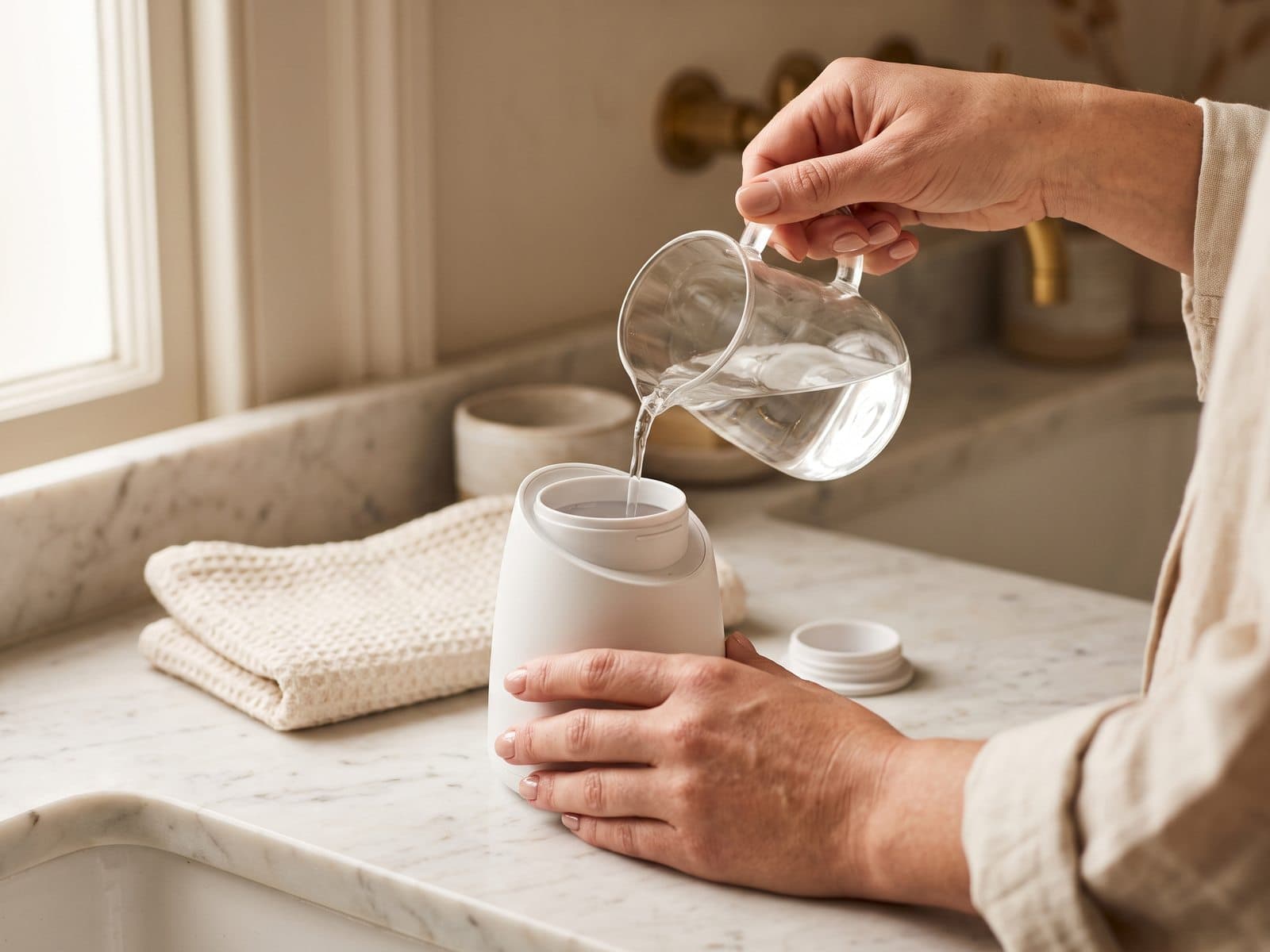
- Read the device instructions. Check what water it accepts, how it should be positioned and any maximum session time. Models differ, so the booklet takes precedence over generic advice.
- Prepare your skin and hair. Tie hair back and remove make-up, sunscreen and daily grime with a gentle cleanser. Pat dry. Do not steam over make-up, a scrub or a product that is already stinging.
- Fill the tank carefully. Use clean water and only the type allowed by the manufacturer. Do not add essential oils, salt, toner or cleanser unless the instructions explicitly permit it. Keep the appliance on a stable, dry surface.
- Set a comfortable distance. Sit upright and begin around 20 to 30 centimetres from the nozzle, moving farther away if the mist feels hot. Do not put your face against an attachment or position yourself where condensed hot water could drip onto skin.
- Protect your eyes and keep still. Close your eyes while the mist is directed at your face. Avoid staring into the outlet, and keep the device and cord away from the sink basin. The mist should feel gently warm, never sharp, stinging or painful.
- Keep the first session short. Start at about five minutes. Some general advice allows longer sessions, but there is no reason to push through heat or flushing. Stop immediately if your face burns, stings, feels tight or becomes markedly red.
- Switch off and finish gently. Turn the steamer off before moving it. Pat your face rather than rubbing, then use one familiar next step such as moisturiser or a hydrating mask. Avoid stacking several strong products while skin is warm.
The Lumavir nano ionic facial steamer is intended for skincare use. Its product guidance recommends a comfortable distance, a session of around 8 to 10 minutes at most, and stopping sooner if skin looks flushed. If you are new to steaming, start below that maximum and increase only if the experience remains comfortable.
Steam can burn, even when there is no direct contact with boiling water. Healthline advises keeping a safe distance, following the device booklet and closing your eyes for comfort. If you feel overheated, switch off, move away and let your skin cool naturally. Do not apply ice directly to the face.
Facial steamer before or after cleansing?
Cleanse first, then steam briefly, then continue with a simple skincare step. This removes make-up and surface residue before adding warmth and moisture, and it follows the common facial sequence of cleansing before steam and mask.
Use a mild cleanser suited to your skin and rinse it away fully. If you wear make-up or sunscreen, take it off rather than expecting steam to do the cleaning. After steaming, rinse with lukewarm water only if you have residue to remove, then pat dry. Follow with a familiar moisturiser or a mask labelled for your skin type. You do not need a toner to "close" pores: pores do not have shutters.
A mask can be a reasonable next step if it is one you have used comfortably before. Keep it hydrating or otherwise gentle, follow its own label and avoid combining steam with a new peel, retinoid or strong exfoliant in the same session. Warm skin may feel more reactive, and adding several variables makes it harder to tell what caused irritation.
How often should you use a facial steamer?
Once a week is a sensible starting point for many people, with less frequent use for dry or reactive skin. Oily skin may tolerate a second short session, but daily steaming is unnecessary and can leave skin dry or irritated.
Let your skin set the pace more than a skin-type label does. If your face feels comfortable afterwards and looks like itself again soon, keep the same rhythm. If you notice lasting redness, tightness, flaking, extra sensitivity or stinging when applying your usual products, stop and give your skin time to settle. Do not steam again just because a weekly calendar says it is time.
If your skin is oily and stays comfortable, you could consider a second session several days later. Dry, sensitive or easily flushed skin may prefer once every couple of weeks, or no steaming at all.
WebMD also advises against daily face steaming and notes that dryness, irritation and redness can be downsides. A conservative starting schedule is more useful than trying to steam as often as possible.
Blackheads, masks and extractions after steaming
Steaming may soften a plug of oil and dead skin, but it does not remove a blackhead on its own. A mask can follow if your skin tolerates it; squeezing and forceful extraction can irritate or injure skin.
If blackheads are your concern, keep the next step gentle. Use a product already suited to your routine, or ask a pharmacist or dermatologist about persistent concerns. Avoid digging at pores with fingernails or metal tools. If you use a pore vacuum, follow that device's own directions, begin on its lowest setting and do not pass over irritated, broken or very delicate skin. You can find the Lumavir blackhead remover vacuum as a separate tool; steaming is not a requirement to use it, and the two steps should not be combined if your skin is already flushed or sensitive.
Do not treat a warm face as permission to press harder. If a blackhead does not release easily, leave it. The short-term appearance of a clear pore is not worth a scratch, broken skin or lingering redness. A professional can advise on safe extraction if you need more than a gentle at-home routine.
Who should avoid facial steaming or ask first?
Skip steaming if your skin is sunburnt, broken, actively irritated or recovering from a recent procedure. Ask a GP, pharmacist or dermatologist first if you have rosacea, eczema, visible broken capillaries or another condition affected by heat.
Heat can worsen flushing for some people with rosacea; the American Academy of Dermatology's rosacea guidance includes overheating among the triggers to manage. People with persistent eczema or irritation should ask a clinician before adding heat to their routine. A recent peel, laser treatment, waxing or other procedure can leave the skin more sensitive, so wait for the clinician or provider who performed it to confirm when heat is suitable.
Treat warmth, burning, stinging or growing redness as a stop signal, not a sign that the steam is working. Switch off, move away and let the area cool. If discomfort persists, or skin blisters or becomes painful, seek appropriate medical advice. For cold or sinus symptoms, this is a skincare device; speak to a pharmacist for health advice.
How to clean a facial steamer and avoid stale water
Empty the tank after every use, rinse and dry removable parts as the manual permits, and leave the device open to air-dry. Descale it only according to its manufacturer instructions, especially if you live in a hard-water area.
Once the unit is switched off, unplugged and cool, pour out remaining water rather than leaving it to stand until your next facial. Rinse the tank with clean water if the manual allows, wipe the outside with a soft clean cloth, and let parts dry fully before reassembly. Keep the appliance on a dry surface and do not immerse its electrical body or put it in a dishwasher.
Minerals in hard water can leave scale, but descaling methods vary between devices. Follow the supplied instructions for the correct water type and cleaning schedule. Do not assume vinegar, bleach, soap or a scented cleaner is safe for the tank, heating element or mist path. If you notice residue, an unusual smell or a change in mist output, stop using the device until it has been cleaned as directed.
Hygiene matters because a warm, damp tank is a poor place to store yesterday's water. Fresh water for each use, an emptied reservoir and complete drying between sessions are simple habits that avoid stagnant water and help keep the device ready for next time.
Browse the wider skincare tools and devices range if you are comparing at-home facial tools.
How we wrote this guide
The Lumavir team wrote this guide from the skincare guidance linked above and from the instructions supplied with our nano ionic steamer, and checked it on 18 October 2026. We sell the steamer mentioned here and have not run clinical tests of our own, so treat this as general information, not medical advice. If you spot an error or a source that has changed, email info@lumavir.com and we will correct it.
Frequently asked questions
- What benefits does steaming your face have?
- Facial steaming briefly warms and moistens the skin, which can soften surface oil and leave skin feeling more supple before the next skincare step. The effect is temporary. Steam does not treat acne or remove blackheads on its own, and pores do not open and shut.
- Should I wash my face before using a facial steamer?
- Yes. Remove make-up, sunscreen and surface dirt with your usual gentle cleanser before steaming, then pat your face dry. After the session, continue with one familiar step, such as moisturiser or a mask. Avoid an exfoliating scrub immediately before heat if it leaves your skin sensitive, and do not steam over active irritation.
- How long should you steam your face?
- Follow your steamer manual first. Keep a first session to around five minutes and stop sooner if the mist feels hot or your skin becomes uncomfortable. Some general skincare guidance allows sessions up to about ten minutes, but the limit for your model may differ. The step-by-step section covers distance and other precautions; never extend a session to chase a stronger effect.
- How many times a week should you use a facial steamer?
- Once a week is a sensible starting rhythm for many people. Oily skin that stays comfortable may tolerate a second session several days later, while dry or reactive skin may do better with less frequent use or none. Skin type labels are only a guide. Reduce or stop if you notice tightness, stinging or lingering redness, as described in the frequency section above.
- What should I do after steaming my face?
- Pat away moisture gently, then use one familiar skincare step, such as a hydrating mask or moisturiser. Avoid adding a strong new active ingredient while your skin is warm. Steaming does not mean you need to extract blackheads; leave a plug alone if it does not release easily. The section on blackheads and extractions has more on keeping that step gentle.
- How do you clean a facial steamer?
- Switch the steamer off, unplug it and let it cool before handling it. Empty the tank after each session, rinse it only if the manual allows, and leave removable parts open to dry fully. Wipe the exterior with a clean, soft cloth. Descale as the manufacturer directs because cleaning methods differ between models. See the cleaning section above for storage and water guidance.
Make steaming a simple part of your routine
The Lumavir nano ionic facial steamer is designed for an at-home skincare routine. See the product page for the current price. UK delivery is free, with estimated delivery of 6 to 8 business days. Returns are available within 14 days; change-of-mind return postage is paid by the customer.