 LUMAVIR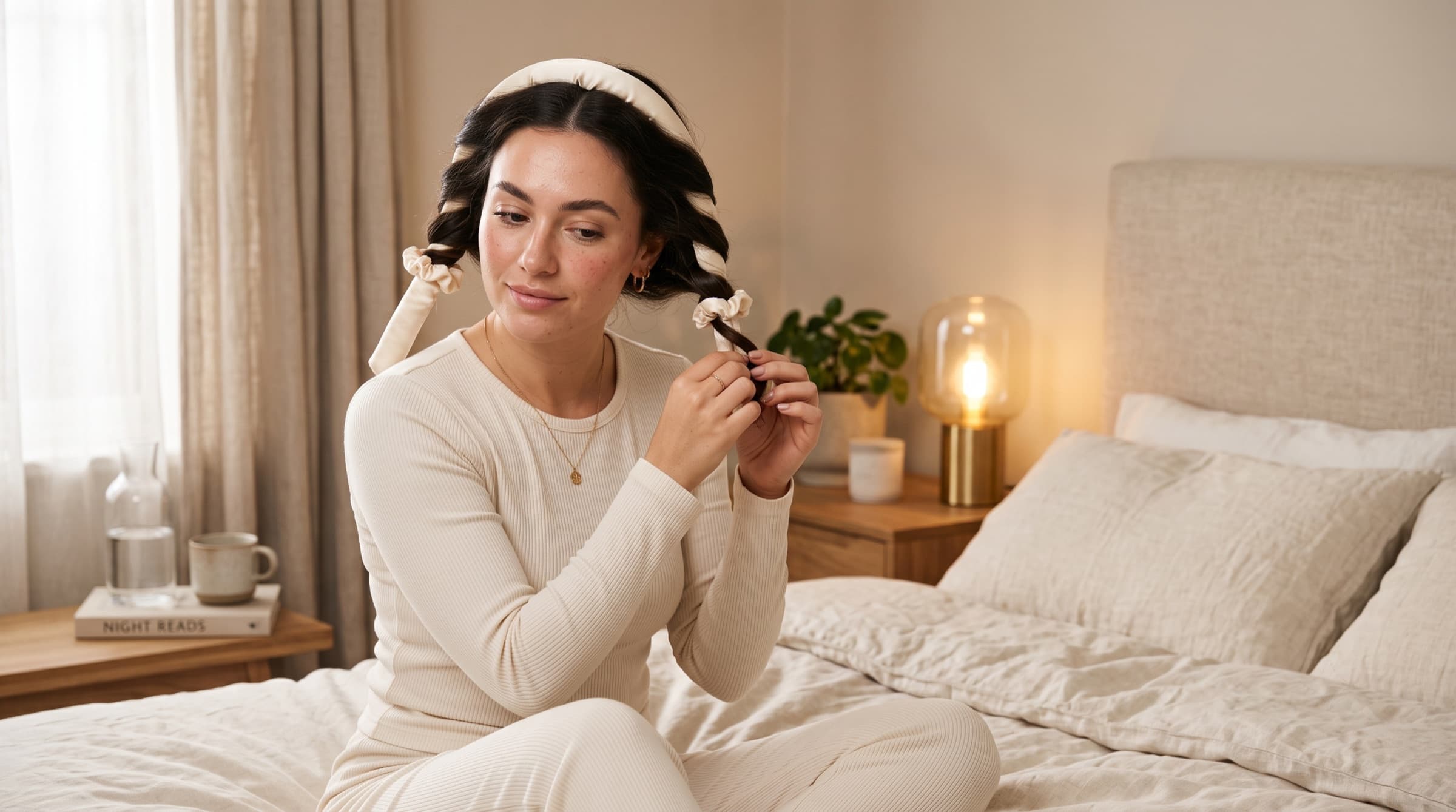
Heat-free curling works because damp hair sets as it dries in a shaped position. You're not forcing a curl against your hair's natural grain; you're letting it dry into the shape you've created. This method is gentler than heat styling and avoids the damage that comes from repeated exposure to high temperatures.
Before you start: the 3 things that decide whether heatless curls hold
Before you wrap a single section, three factors will make or break your curls: damp level, a light styling product, and consistent wrap tension.
Damp level is the hidden detail
Everyone says "damp hair" and leaves it at that. Here's the precision: your hair should feel like a wrung-out towel. That's roughly 70-80% dry. Not dripping wet (curls won't set), not bone dry (won't take the shape), but with a slight dampness that's nearly dry to the touch.
Why this matters: wet hair takes too long to set and often falls flat before morning because it's still shedding water. Completely dry hair won't hold the wrap at all; it has no flexibility. That sweet spot of 70-80% dry is where your hair is pliable enough to hold a shape but dry enough to set properly overnight. If you've just shampooed, towel-dry, let it air dry for 15-30 minutes, then test: run your fingers through. It should feel cool but not wet.
A light styling product anchors the curl
Apply a small amount of curl cream, mousse, or light hold spray before wrapping. This gives the curl something to grip and prevents the sections from unravelling as you sleep. A pea-sized amount of curl cream per section is enough; mousse, a 2-second pump; spray, one light mist. Avoid heavy oils or serums; they make hair slippery and the curl won't hold.
Wrap tension must be consistent (but not tight)
Tension that's too loose won't create a defined curl; the hair just falls out of the wrap. Tension that's too tight will damage hair and make sleeping uncomfortable. Aim for firm enough that the section doesn't slip, but loose enough that you can slide your finger under the wrap. Think of it as snug, not clamped.
Method 1: Heatless curling rod (the overnight ribbon rod)
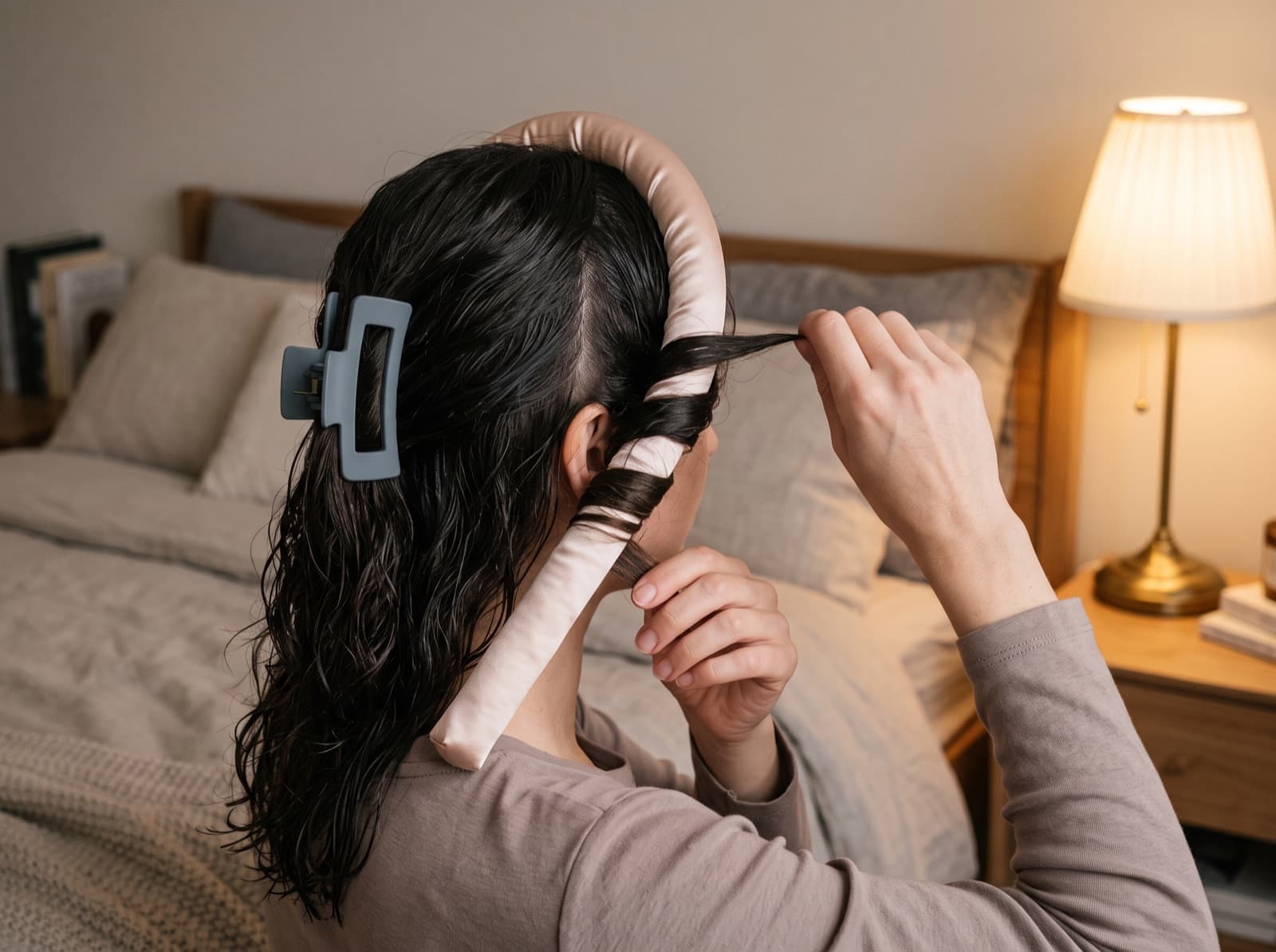
Ribbon rods are long soft rods (like fabric tubes or satin ribbons) that you wear across the top of your head like a headband. This is the most reliable method for defined curls and is comfortable overnight.
Step-by-step with timings
- Start with damp hair (70-80% dry, as described above). Apply a small amount of curl cream or mousse to your roots.
- Lay the ribbon rod across the top of your head, positioning it where you'd wear a headband. This is your anchor.
- Part your hair down the middle or create sections on each side. Take one section of hair (about 1-1.5 inches wide from root to tip).
- Wrap this section around the ribbon rod, working away from your face. Keep the tension snug but not tight. Once wrapped, tuck the end under or secure it.
- Repeat on the other side of the head, wrapping sections around the rod in the same direction.
- Once all sections are wrapped, secure the ribbon rod ends together (tie them, pin them, or use scrunchies). This takes 10-15 minutes for most people.
- Leave the rod in overnight (or for at least 8 hours). The longer you leave it, the more set the curl becomes.
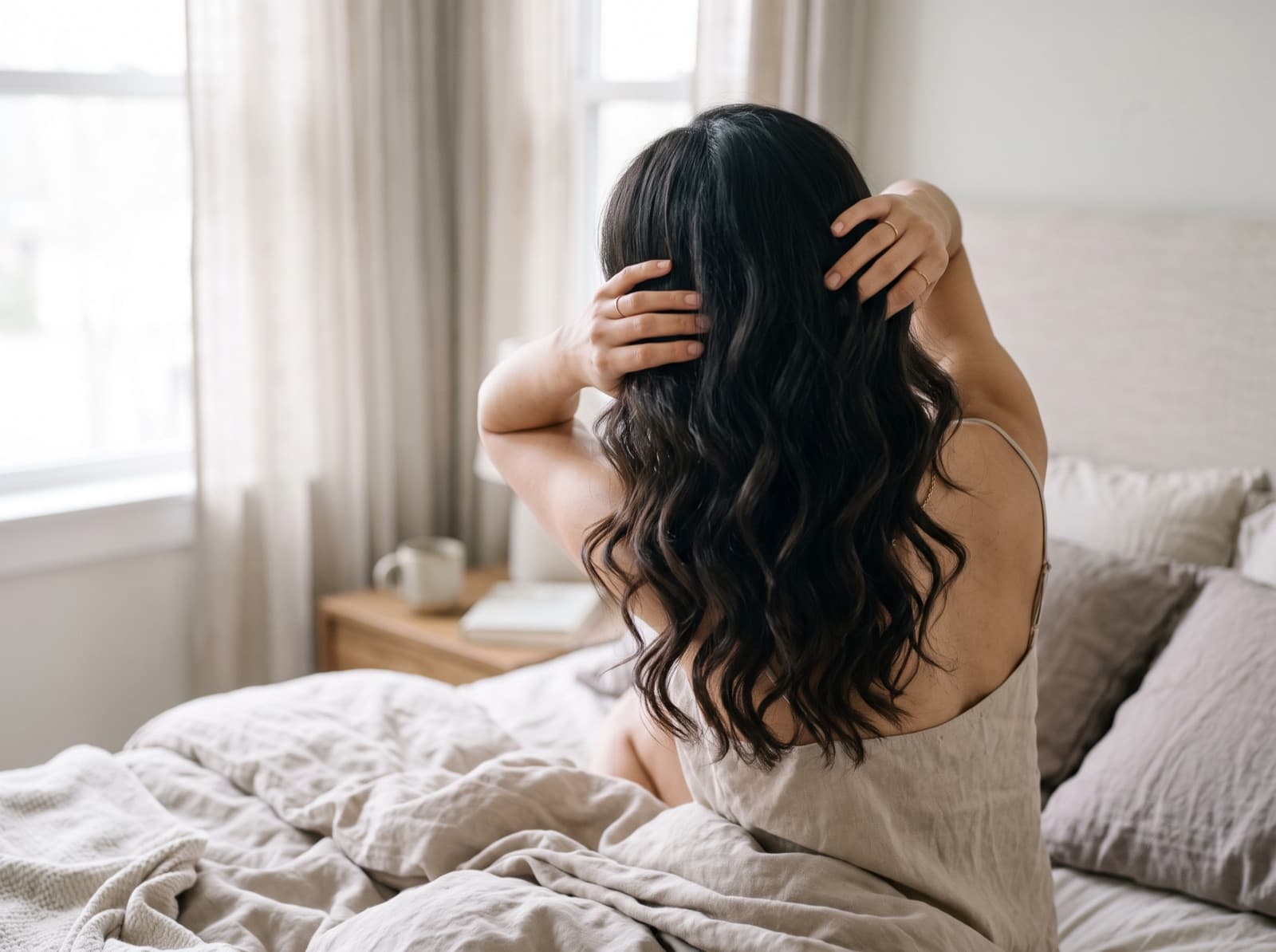
- In the morning, gently release the rod ends and carefully unwind the wrapped sections.
- Finger-comb through the curls gently or use a wide-tooth comb. Avoid brushing, which will frizz them out.
- Finish with a light hold spray (one quick mist over all curls).
How to sleep comfortably with a ribbon rod
Sleeping with a ribbon rod in takes getting used to. Sleep on your back or side; avoid burying your head in the pillow face-first. Use a satin pillowcase (or a satin sleep cap) to reduce friction and frizz. The ribbon rod should feel snug but not uncomfortable; if it presses painfully into your scalp, you've wrapped too tightly or need to adjust the positioning.
Lumavir heatless curling rod kit
Our heatless curling rod kit is the ribbon-rod style used in Method 1: a soft flexible rod you wrap overnight, with no heat involved. If you would rather improvise first, the sock method below costs nothing. Browse our full haircare range for styling products, satin pillowcases, and other hair care essentials.
Hold duration
Curls from ribbon rods typically last 12-18 hours, especially if you use hold spray. Slept well on a satin pillowcase. Expect closer to 18 hours, even on fine hair.
Method 2: Sock curls
Sock curls work well for anyone and cost nothing if you already have socks. They're ideal if you have shorter hair (shoulder-length or less) or if you want to test heatless curling before investing in rods.
Step-by-step
- Use clean socks with a smooth texture (cotton, bamboo, or acrylic work; avoid thick athletic socks with heavy ribbing).
- Start with damp hair. Apply curl cream or mousse.
- Divide your hair into 6-10 sections depending on thickness and length. For short hair, use 6-8 sections and make them smaller (about 1 inch wide).
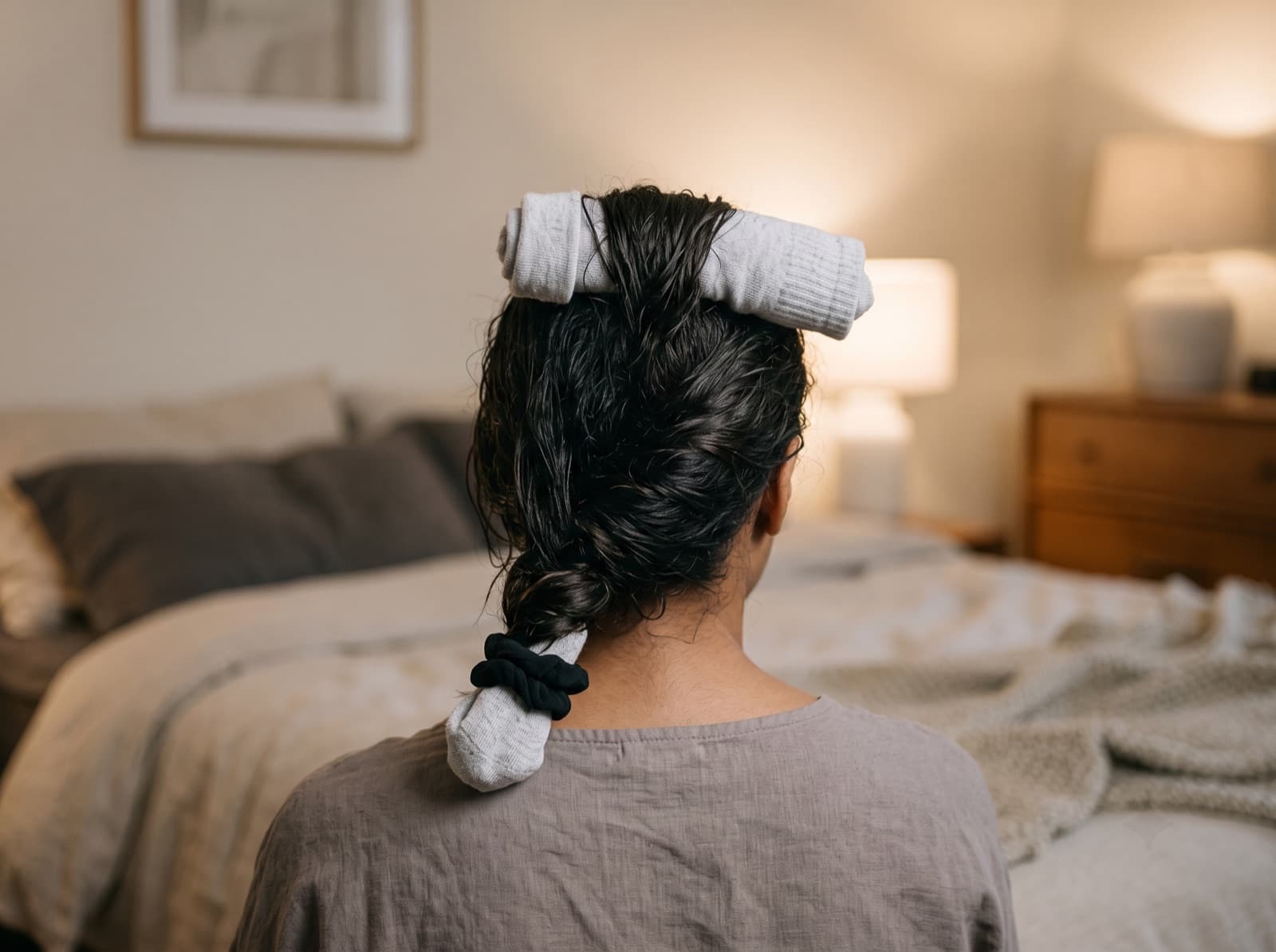
- Take a section of hair. Hold a sock horizontal at the ends of the section. Roll the section upward toward the roots, wrapping the hair around the sock as you go.
- Once you reach the roots, tie the sock ends together (knot them or tuck one sock end through the other).
- The sock should feel snug but comfortable. Leave overnight (8+ hours).
- In the morning, untie and gently unroll each sock.
- Finger-comb gently, then use hold spray.
When socks beat a rod
Socks are more comfortable if you have a sensitive scalp or if you move a lot in your sleep. They're also cheaper and take up less drawer space. For very short hair (pixie to chin length), socks often work better than full-length rods because socks are easier to secure in smaller sections. Socks don't grip quite as firmly as rods, so if you have very fine or slippery hair, a rod will hold better.
Hold duration
Sock curls typically last 10-16 hours depending on hair type. Fine hair loses curls sooner; thick or coarse hair holds them longer.
Method 3: Headband or robe-belt curls
This method creates soft waves or loose curls and is the easiest to do if you're pressed for time.
Step-by-step
- Start with damp hair (70-80% dry). Apply a light styling product.
- Use a wide elastic headband, a hair wrap, or a soft fabric belt (like from a robe or scarf).
- Place the headband around your head like a crown, at about ear height. Make sure it's snug but not too tight; you should be able to fit a finger under it comfortably.
- Take one section of hair from one side of your head (about 1-2 inches wide). Wrap this section around the headband, tucking the end under. Repeat all the way around your head, working from front to back on both sides. You're essentially rolling your hair onto the headband itself.
- Once all sections are wrapped, leave the headband in overnight (8+ hours).
- In the morning, gently unwind each section from the headband.
- Finger-comb and use hold spray.
Loose waves vs. defined curls
This method gives looser waves than rods or socks, especially if you use a very wide headband. If you want tighter curls, use a narrower headband or wrap each section more snugly. The waves will be softer and more textured no matter what, which is ideal if you want a beach-hair or tousled look rather than defined ringlets.
Hold duration
Headband curls last 8-14 hours. They're the least durable method but the most forgiving if you're new to heatless curling.
Method 4: Plaits and twists
Braids and twists create waves or texture rather than defined curls, and they work overnight or can be done during the day for next-day texture.
Braids for waves
Create 2-4 plaits (depending on hair thickness and desired wave size) by sectioning damp hair and braiding each section loosely from root to tip. Secure the ends with small elastic bands. Leave overnight. In the morning, unbraid gently for soft, textured waves.
Twists for texture
Divide damp hair into 4-6 sections. Twist each section from root to tip (a two-strand twist, like twisting a rope). Secure the ends and leave overnight. Untwist in the morning for crimped or zigzag texture.
Hold duration
Braid waves last 12-16 hours. Twist texture lasts similarly but tends to soften into more of a wave as the day goes on.
Heatless curls for short hair
Short hair (chin-length and up) needs different methods than longer lengths. Standard full-length rods won't work, and wrapping technique changes.
What works best for bobs and pixies
Use mini curling rods (0.5-0.75 inches) instead of standard rods, or switch to socks for finer control. Short-hair sections should be smaller: about 0.75-1 inch wide, not the 1.5-2 inch sections longer hair uses. You'll need more sections (10-14 instead of 8-10), but the actual wrapping is faster because each section is shorter.
Sock curls for short hair
Socks often work better for short hair than rods because socks are easier to position in smaller sections and less likely to slip. Use one sock per section and make sure the wrap is snug at both the roots and the ends.
Headband method for short hair
A headband works well for chin-length bobs. Use a narrower headband or a fabric band, and wrap smaller sections around it. The result will be wavy rather than curled (the sections are too short for defined curls), but the waves can be quite pretty.
Plaits and twists
For very short hair (pixie length), try two-strand twists. Create 4-6 twists across your scalp, securing each with a small clip or elastic. Untwist in the morning for textured waves. This method works well overnight or during an afternoon nap.
Hold duration for short hair
Short hair tends to hold curls longer because there's less weight pulling the curls down. Expect 14-20 hours of hold with any method, sometimes longer if you have very fine or naturally curly hair.
Which heatless curl method should you pick?
Each method has trade-offs. This table compares them across the factors that matter most.
| Method | Time to Set | Hold Duration | Sleep Comfort | Best Hair Length/Type | Frizz Risk |
|---|---|---|---|---|---|
| Ribbon Rod | 10-15 min | 12-18 hrs | High (soft, gentle) | Shoulder-length and longer; all types | Low if you use satin pillowcase |
| Sock Curls | 15-20 min | 10-16 hrs | High (soft, less pressure) | Shoulder-length and shorter; especially fine hair | Low |
| Headband | 10-15 min | 8-14 hrs | High (gentle, loose) | Chin-length and longer | Medium (looser waves are less frizz-prone) |
| Plaits/Twists | 10-15 min | 12-16 hrs | High (loose, flexible) | All lengths | Medium to high (tight braids frizz more) |
How to choose
Start with a ribbon rod if you have shoulder-length or longer hair and want defined, long-lasting curls. Use socks if you want comfort, have short hair, or are trying heatless curling for the first time. Pick the headband method if you want loose waves and minimal setup. Go with plaits or twists if you want texture and don't mind a less structured curl.
Why your heatless curls fall out (and fixes)
Not all heatless curl attempts succeed. Here's why, and how to fix it.
Hair too wet
Wet hair won't set overnight because water is still evaporating and the curl relaxes as the hair dries. It also takes longer to dry, so you might wake up to damp hair that hasn't curled at all.
Fix. Always start at 70-80% dry. After shampooing, towel-dry and let air dry for 15-30 minutes before wrapping. Test by running your fingers through; if it's still cool to the touch and barely damp, you're ready.
Hair too dry
Completely dry hair is inflexible and won't hold a wrap. The sections slip out or unroll during the night.
Fix. If you've air-dried too long, mist your hair lightly with water or a spray bottle before wrapping. You want that just-damp feel again, not wet but not dry.
Sections too large
Thick sections take longer to set and often lose their curl partway through the night, especially if you sleep on them.
Fix. Divide your hair into smaller sections (1-1.5 inches wide, not 2-3 inches). Thicker hair needs more sections; fine hair can handle fewer but should still respect this width guideline.
No styling product
Without curl cream, mousse, or spray, hair has nothing to grip and slips out of the wrap.
Fix. Apply a small amount of product before wrapping every section. Without it, the curl will slip out.
Brushing instead of finger-combing
A brush breaks up the curl structure immediately after you release the wrap.
Fix. Use your fingers to gently separate curls once the rods are out. A wide-tooth comb is okay if you must untangle, but hands are best.
Humidity and frizz
High humidity can cause curls to relax slightly and frizz to develop, especially on fine hair.
Fix. Use a light hold spray after curls are set. If humidity is extreme (summer, bathroom steam), let curls dry completely in a cool room before exposing them to humidity. A satin sleep cap or satin pillowcase reduces friction frizz.
Rolling or sleeping on curls
Moving around in your sleep or rolling onto the side where your curls are can flatten them.
Fix. Try to sleep on your back or on the side without curls. Use a satin pillowcase to reduce friction. Some people find socks or plaits more durable under active sleeping.
Making heatless curls last all day
Once your curls are set, you want them to hold as long as possible. A few quick steps extend hold by several hours.
Apply light hold spray once curls are fully released and finger-combed. One mist is enough; heavy spray looks stiff and flakes out. If curls start to drop by midday, give them a light blast of cold air from a hair dryer (cold setting only) for 30 seconds. The cool air sets the curl again.
At night, pineapple your curls to preserve them for day two. Gather curls into a loose, high ponytail on top of your head (don't crush them) and secure with a soft elastic or silk scrunchie. Sleep on a satin pillowcase. In the morning, release the ponytail gently and fluff with your fingers. Day-two curls often look fuller and messier (in a good way) than day-one curls.
Frequently asked questions
- How long do heatless curls take to set?
- The wrapping itself takes 10-20 minutes depending on hair length and thickness. The actual setting happens overnight; most curls are fully set after 8-10 hours. Leaving rods or socks in for 12+ hours gives better-defined curls, especially on fine hair.
- Can you do heatless curls on dry hair?
- No, dry hair is too inflexible and won't hold a wrap. You need hair at about 70-80% damp (like a wrung-out towel) for curls to set. If your hair is completely dry, mist it with a spray bottle before wrapping.
- Do heatless curls damage your hair?
- Heatless curls are gentler than heat styling because there's no thermal damage. However, very tight wrapping can cause tension breakage over time, and sleeping with rods in can cause friction. To minimise risk, wrap snugly but not tightly, use a satin pillowcase or sleep cap, and don't wrap the same way every day.
- How do you do heatless curls with short hair?
- Use mini curling rods (0.5-0.75 inches) or socks for smaller sections. Divide hair into 10-14 small sections (about 0.75-1 inch wide). Sock curls often work better for short hair because they're easier to secure in small sections. Headbands and plaits also work well for chin-length bobs and pixies.
- Are heatless curls better than a curling iron?
- Heatless curls are gentler and don't cause heat damage, so they're better for frequent styling or if you have fragile hair. They take longer to set (overnight vs. minutes) and the curls are softer and less uniform. If you need defined curls in an hour, a curling iron is faster. If you want to protect your hair and don't mind planning ahead, heatless curling wins.
- How long do heatless curls last?
- Hold duration depends on the method and your hair type. Curling rods typically last 12-18 hours; socks, 10-16 hours; headbands, 8-14 hours; plaits and twists, 12-16 hours. Fine hair loses curls sooner; coarse hair holds them longer. Using hold spray and a satin pillowcase extends duration by a few hours.
Our best-value pick
The Lumavir heatless curling rod kit is gentle overnight wear with free UK shipping and a 14-day money-back guarantee, so there is time to settle into a routine before you commit.