Free UK shipping on every order · 14-day money-back guarantee
Track your order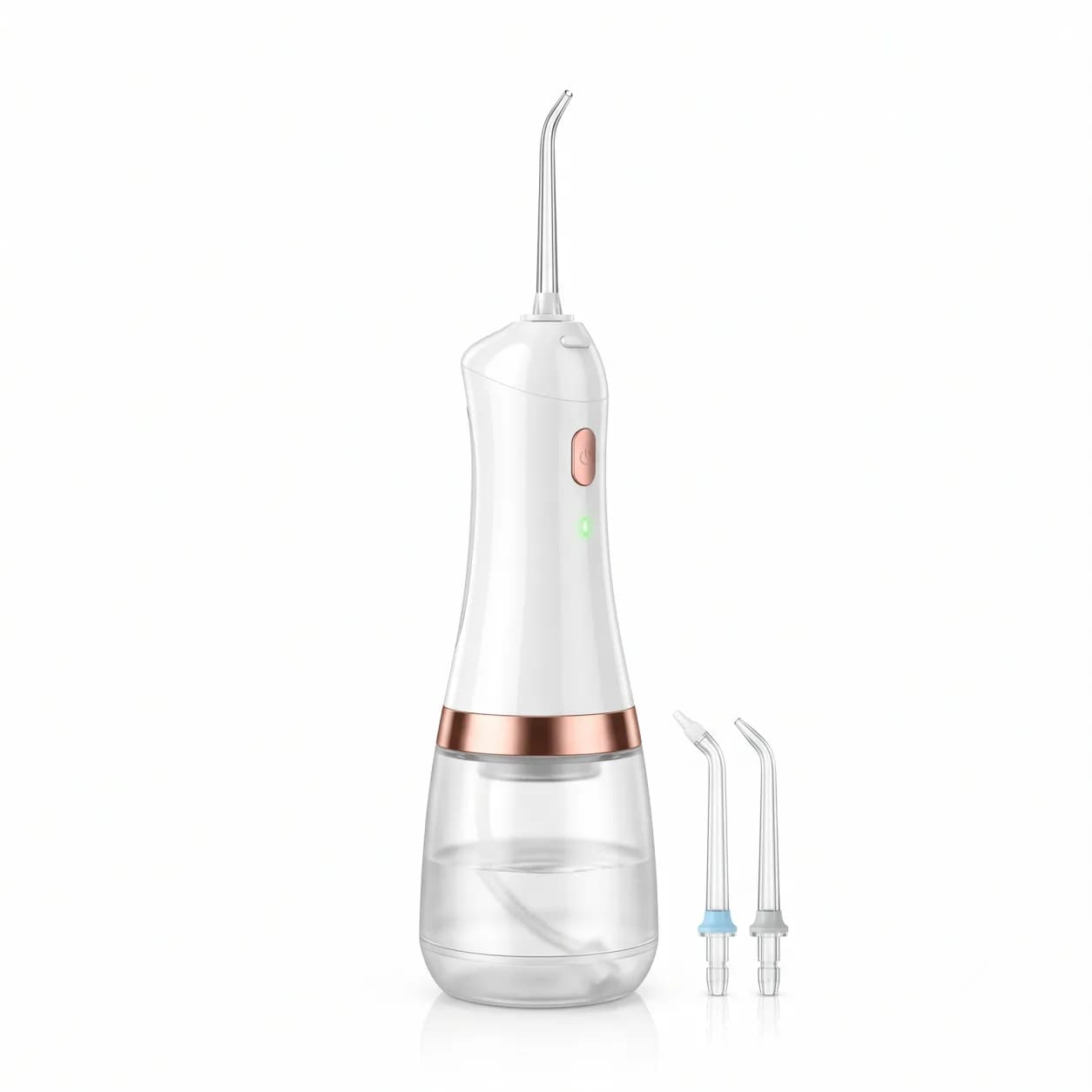
Low Stock
Oral Care
Written and reviewed by the Lumavir beauty-tech team. We research the at-home beauty devices we sell and keep every product detail factual and current. Last updated July 2026.
£24.99
A cordless water flosser that sends a pulsed jet of water between your teeth and along the gumline, covering the whole mouth in about a minute. It is the version of flossing people actually keep doing.
Bundle & Save
1 Piece
£24.99
£29.99
2 Pieces
You get 30% off!
£42.00
£59.98
3 Pieces
You get 33% off!
£60.00
£89.97
Lumavir builds at-home devices for people who would rather not make a project out of a daily habit. This is the most practical thing we sell and the one with the clearest case behind it.
Brushing does the outer surfaces of your teeth and largely misses the contact points between them. NHS guidance is blunt about why that matters: "Plaque is a film of bacteria that coats your teeth if you don't brush them properly. It contributes to gum disease and tooth decay." The spaces between teeth are exactly where that film sits undisturbed. A water flosser aims a pulsed jet of water into those gaps and along the gumline to flush it out.
Here is the part other listings skip. NHS guidance on cleaning between teeth names floss and interdental brushes. It does not mention water flossers at all. So we are not going to tell you a dentist prescribed this, because the official guidance points elsewhere. What the NHS does say is that "regular flossing may also reduce gum disease, tooth decay and bad breath by removing plaque that forms along the gum line", and that interdental brushes work "instead of flossing, especially if there are gaps between your teeth".
The honest case for a water flosser is therefore about compliance rather than superiority. String floss works well when it is used correctly and used every day, and the overwhelming majority of people manage neither. A water flosser takes about a minute, requires no technique, and is pleasant enough that people keep going. The best interdental cleaning method is the one you will still be doing in six months. If you already floss with string nightly and get on with it, you genuinely do not need this and we would rather you kept your money.
Where a water flosser earns its place most clearly is around hardware. Braces, bridges, implants and permanent retainers are all difficult to thread string floss through, and a jet of water goes where string cannot easily be manoeuvred. That is the group who tend to buy one and never go back.
On the brand question, because you will have noticed it. The search results for this product are almost entirely Waterpik, who have been making these since the 1960s and who publish clinical claims we simply do not have. We are not going to pretend to match that. A Waterpik Cordless Pulse is around £36 to £45 at Boots and Argos, and the Waterpik range runs to £75. If brand and published testing matter to you, buy theirs, and we mean that.
We checked the UK search results for "cordless water flosser" in July 2026 and the market splits cleanly. Unbranded cordless flossers sit at £9.45 to £24.99, which is where the volume is. Branded units run £36 to £60, with Waterpik at £36 to £50 and Panasonic at £54.21. We priced this at £24.99, at the top of the unbranded tier rather than pretending into the branded one. You are buying a functional cordless flosser with free UK shipping and 30 days to return it, not a brand with a research department.
The other device in the range is the LED teeth whitening kit, which is a cosmetic product rather than a cleaning one, and we are considerably more cautious about what that can do.
a pulsed jet flushes the contact points between teeth and the gumline, which is where plaque sits undisturbed.
the reason people who buy one keep using it, and the reason it beats the string floss sitting unopened in your bathroom drawer.
water goes where string floss is awkward to thread, which is why people with dental hardware tend to switch and stay switched.
Waterpik and Panasonic run £36 to £60. This is £24.99, with free UK shipping and 14 days to send it back.
The official UK guidance does not name them. NHS advice on cleaning between teeth covers dental floss and interdental brushes, saying you can use interdental brushes "instead of flossing, especially if there are gaps between your teeth". Water flossers are not mentioned in that guidance, and any retailer implying the NHS endorses one is overstating things.
What the guidance does establish is why cleaning between teeth matters at all. The NHS describes plaque as "a film of bacteria that coats your teeth if you don't brush them properly" which "contributes to gum disease and tooth decay", and says regular flossing "may also reduce gum disease, tooth decay and bad breath by removing plaque that forms along the gum line". Note the hedge in "may": even for string floss the language is measured.
So the sensible way to think about a water flosser is as a practical route to a job that needs doing, rather than a clinically superior one. It is quick, it needs no technique, and it reaches around braces and bridges. If you have gum problems, bleeding that does not settle, or dental work you are unsure about, ask your dentist what they want you to use, because they know your mouth and we do not.
Fill the reservoir with warm water. Cold water is uncomfortable on sensitive teeth.
Lean over the sink and put the tip in your mouth before you switch it on, or you will redecorate the bathroom.
Start on the lowest pressure setting, especially for the first week while your gums adjust.
Aim the tip at the gumline at roughly ninety degrees and trace along it, pausing briefly between each tooth.
Work all the way round, inside and out. The whole mouth takes about a minute.
Empty the reservoir after use and leave it open to dry.
Cordless Water Flosser
£24.99
 LUMAVIR