Free UK shipping on every order · 14-day money-back guarantee
Track your order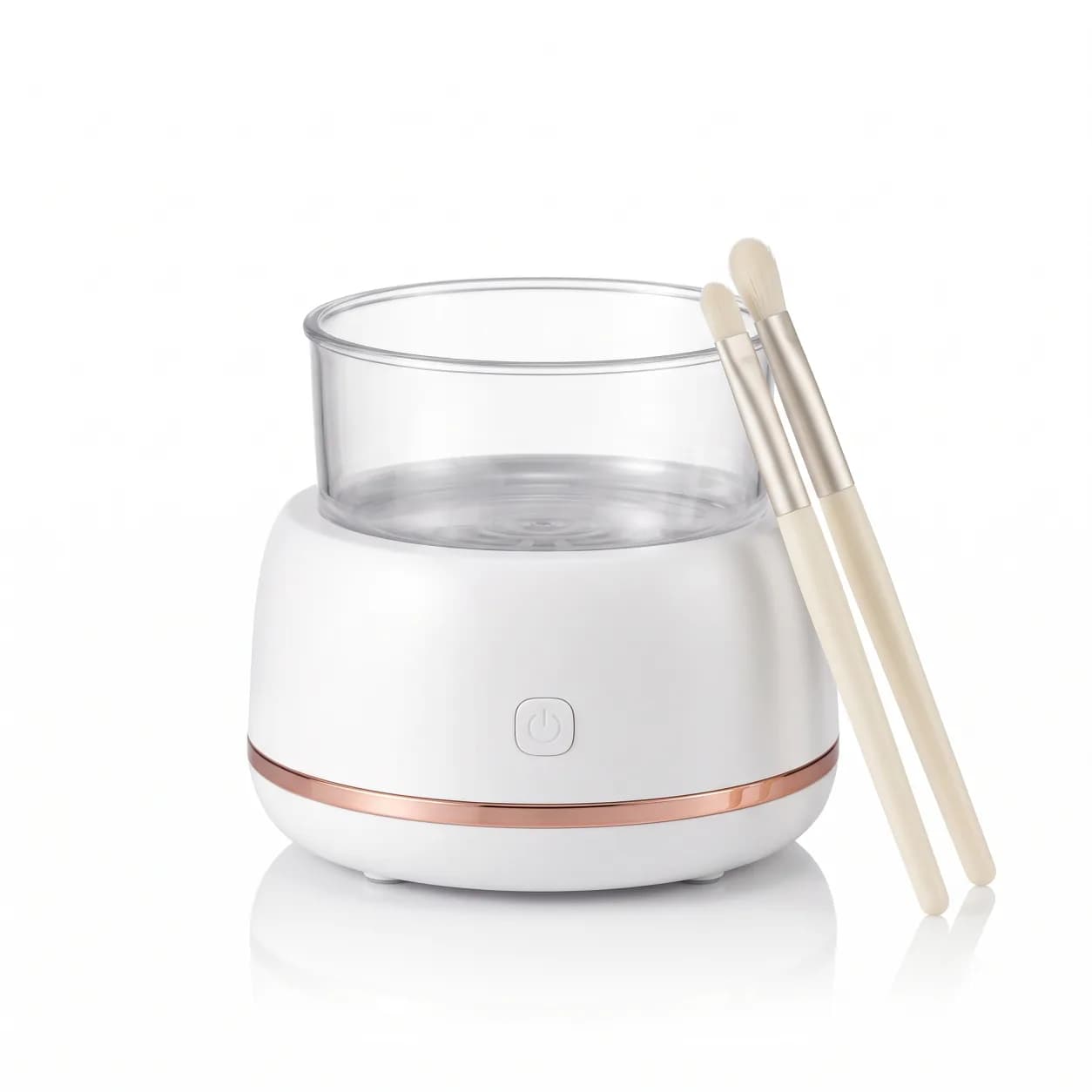
Low Stock
Skincare
Written and reviewed by the Lumavir beauty-tech team. We research the at-home beauty devices we sell and keep every product detail factual and current. Last updated July 2026.
£15.99
An electric makeup brush cleaner that spins your brushes clean in a bowl of water and cleanser, so a job that takes twenty minutes at the sink takes a few. It buys you time and consistency, not a fundamentally better clean.
Bundle & Save
1 Piece
£15.99
£19.19
2 Pieces
You get 30% off!
£27.00
£38.38
3 Pieces
You get 34% off!
£38.00
£57.57
Lumavir sells at-home beauty tools, and we will start this one by telling you that you do not need it. Cleaning makeup brushes by hand works perfectly well and costs nothing. What a machine buys you is the difference between knowing you should and actually doing it.
Start with why it matters, because plenty of people never clean their brushes at all. Healthline's guidance is to wash makeup brushes and applicators at least twice a month, and more often "if you have sensitive skin or are prone to spot outbreaks". Brushes accumulate old makeup, dust, dirt and skin oils, and every application pushes that back onto your face. If you have unexplained congestion along your cheeks or jaw, the brush is worth ruling out before the skincare is.
The manual method, for free: fill a sink with warm water, massage the bristles with baby shampoo or a gentle facial cleanser, work the debris out against a textured pad or your palm, rinse until the water runs clear, and lay the brushes flat to air dry overnight. Healthline suggests conditioner on natural-hair brushes. Done properly for a full set, that is fifteen to twenty-five minutes plus overnight drying, which is precisely why most people do it once a season instead of twice a month.
What an electric makeup brush cleaner changes is that number. You drop the brushes in, it agitates and spins them in water and cleanser, and a full set takes a few minutes rather than twenty. It does not clean more deeply than a careful hand wash. It cleans about as well, far faster, which is the honest and sufficient reason to own one. A tool you use twice a month beats a better method you use twice a year.
There are two different products sold under this name and it is worth knowing which you are looking at. The StylPro type holds one brush at a time on a spinning collet and flings it dry with centrifugal force, so brushes come out nearly dry. This is the bowl type: brushes go into a tub of water and cleanser and are agitated together, so you do more at once but still lay them out to dry. Different trade-off, and StylPro invented the category and does the drying part better.
We checked the UK search results for "makeup brush cleaner machine" in July 2026, and there is something you should know before buying from us. Unbranded bowl-type cleaners run £4.44 to £16. Mid-market ones are £19 to £24. StylPro's own site lists at £29.99 and Argos at £30, but Boots is currently selling the StylPro at £9.00. If that promotion is still live when you read this, it is the better buy and we would rather you took it. We are not going to pretend otherwise to protect a £15.99 sale.
Where this makeup brush cleaner earns its place is if you want to clean a full set at once rather than one brush at a time, or the Boots offer has ended, or you simply prefer buying from somewhere with a 30-day UK returns policy and a person to email.
the reason people who own one actually clean their brushes on schedule rather than seasonally.
bowl type means brushes go in together, rather than mounting them one at a time on a spinner.
most brush sizes go in, and natural-hair brushes can still take conditioner afterwards.
a hand wash with baby shampoo is free and works. This is £15.99 for the time back, with free UK shipping and 14 days to send it back.
Only if the alternative is not cleaning them. A machine does not clean brushes more thoroughly than a careful hand wash with warm water and a gentle cleanser. What it does is cut the time from around twenty minutes for a full set to a few, and that time difference is what determines whether the job actually gets done.
Healthline's guidance is to wash brushes at least twice a month, and more often for sensitive or breakout-prone skin, because brushes accumulate old makeup, dust, dirt and oils that go straight back onto your face. Most people know this and still do not manage it, and the reason is almost always time rather than ignorance.
So the honest way to decide is this. If you already hand wash your brushes twice a month, a machine will not improve your results and you can skip it. If your brushes are cleaned two or three times a year because the sink routine is tedious, a machine will change that, and the change is worth more than the marginal difference in cleaning quality. Either way, brushes still need laying flat to air dry, and a machine does not remove that step unless you buy a spinner type that flings them dry.
Fill the bowl with warm water to the level marked, and add a small amount of gentle cleanser or baby shampoo.
Put the brushes in, keeping the metal ferrules above the waterline where you can. Soaking the ferrule loosens the glue over time.
Run a short cycle, then check a brush. Heavy foundation brushes may want a second cycle.
Rinse the brushes in clean water until no colour comes out.
Reshape the bristles with your fingers and lay them flat, or angled slightly downwards, to air dry overnight.
Empty and rinse the bowl and let it dry before storing.
Electric Makeup Brush Cleaner
£15.99

 LUMAVIR