 LUMAVIR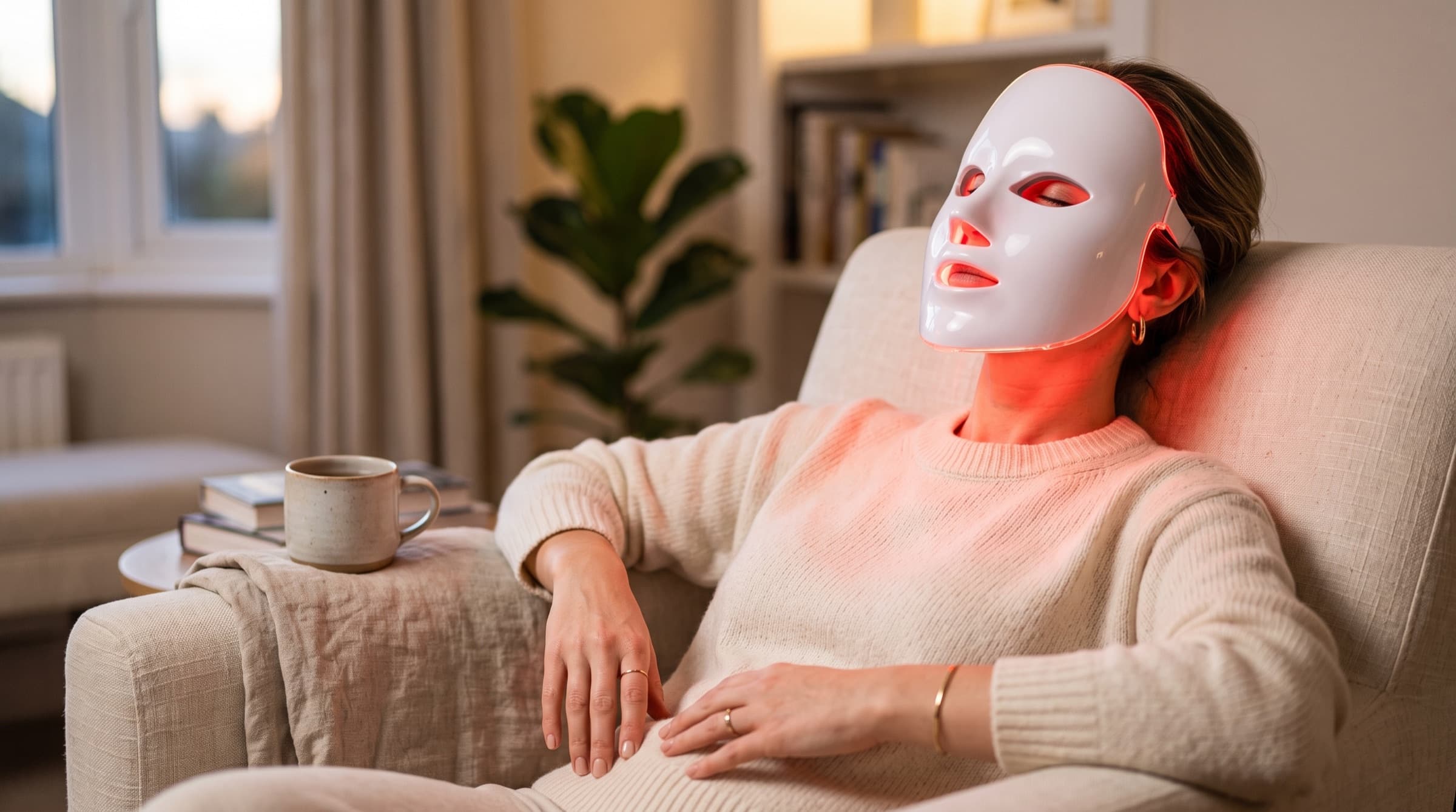
How LED face masks work (photobiomodulation in plain English)
LED face mask therapy, or photobiomodulation, is the science of using specific wavelengths of light to trigger cellular energy production. The light energy is absorbed by mitochondrial chromophores in your skin cells, which stimulates the production of ATP (adenosine triphosphate): the molecule your cells use for energy and repair.
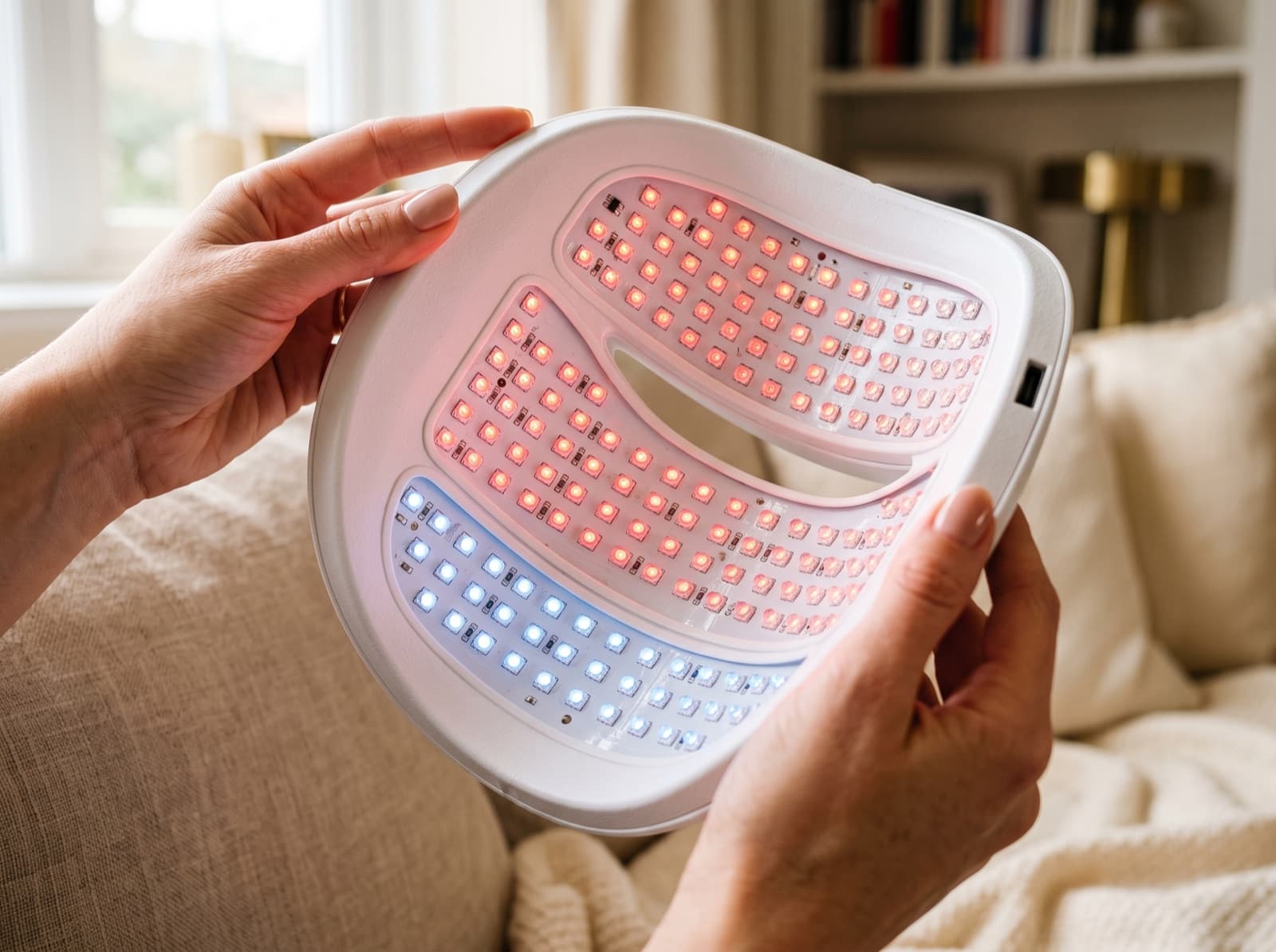
Different wavelengths penetrate to different depths. Red light (630-700 nanometres) reaches the dermis and epidermis, while near-infrared light (760-900 nanometres) penetrates deeper into connective tissue. Blue light (405-470 nanometres) stays mostly in the epidermis and is absorbed by bacteria, making it useful for acne-prone skin. Importantly, LED light does not contain ultraviolet rays, so it does not cause sun damage or long-term skin harm.
The cellular response begins within minutes of exposure. The light stimulates mitochondria to produce more ATP, which energises skin fibroblasts (collagen-producing cells) and increases blood circulation to the treated area. This is why you might notice a subtle glow or temporary reduction in redness after a session. However, visible structural changes like collagen production or pigmentation shifts require consistent, repeated exposure over weeks.
LED mask colours and what each one does
The colour of the light determines which skin concerns it addresses. Manufacturers often combine colours in a single mask to target multiple issues at once. Below is a table of the most common colours and their evidence-supported uses:
| Colour | Wavelength Range | Primary Use | Realistic Outcome |
|---|---|---|---|
| Red | 630-700 nm | Anti-ageing, fine lines, collagen stimulation | Subtle softening of fine lines; improved skin texture over 8-12 weeks |
| Near-infrared | 760-900 nm | Deep collagen and circulation | Skin firmness and glow; works alongside red light |
| Blue | 405-470 nm | Mild acne, oil control | Reduced breakouts and inflammation for mild inflammatory acne only |
| Green | 495-570 nm | Redness, sensitivity, calming | Soothing inflamed or post-treatment skin; least studied |
| Yellow/Amber | 570-590 nm | Redness, lymphatic drainage | Improves redness and skin tone; emerging evidence |
Most at-home masks combine red and near-infrared, or add blue to address mixed concerns. The combination approach is popular because red and near-infrared work synergistically on ageing skin, whilst blue adds acne-fighting benefits if breakouts are a concern. Green and yellow wavelengths appear less frequently in consumer devices and have less published research behind them.
What the studies actually show
The evidence for LED light therapy exists, but it is not as strong as marketing claims suggest. Peer-reviewed research supports the following:
Acne and inflammation: The evidence base is moderate. According to medical literature, blue and blue-red light therapies do show efficacy for mild to moderate acne, particularly inflammatory types. However, most studies are small and of variable quality. Results typically take 4 to 8 weeks to become noticeable, and effects are temporary without ongoing use. Do not expect complete clearing of acne; dermatologists note that most acne patients see symptom improvement, not full resolution.
Anti-ageing and collagen: Research on red and near-infrared light for collagen production exists, but the effects are modest. Studies show these wavelengths can stimulate skin fibroblasts in controlled settings. In real-world use, visible improvements in fine lines or skin firmness are subtle and require consistent application. The results are also highly individual: factors like age, skin type, genetics, and overall skin health affect how well your skin responds.
General skin quality: Published evidence supports mild improvements in skin brightness, texture, and overall radiance with consistent use. These are genuine physiological changes driven by increased ATP production and blood flow to the skin. However, Dr Anjali Mahto, a consultant dermatologist quoted by Patient.info, describes these effects as "very subtle" and "temporary" without ongoing treatment. The Advertising Standards Authority has taken action against brands making exaggerated claims (for example, banning a claim that an LED mask would reduce wrinkles within four weeks).
The key limitation: most LED therapy studies involve small sample sizes, short follow-up periods, and variable study designs. This does not mean LED masks do not work, but rather that we should expect modest, gradual results and treat dramatic before-and-after claims with scepticism.
Do LED face masks work for wrinkles, acne and redness?
Wrinkles and fine lines
LED masks, particularly those combining red and near-infrared light, can help soften fine lines and improve skin texture. The mechanism is real: red light stimulates collagen production in the dermis. However, results are subtle. You might notice softer-looking skin, improved glow, or a marginal reduction in the appearance of fine lines after 8 to 12 weeks of consistent use. If you have deep wrinkles or significant lines, do not expect LED therapy alone to eliminate them. These require more invasive treatments like injectables or lasers, or strong topicals like retinoids.
Mild acne
Blue light is the most evidence-backed colour for acne. It works by reducing oil production in sebaceous glands, triggering anti-inflammatory responses, and killing acne-causing bacteria. Results are most visible for mild, inflammatory acne (red bumps). Cystic acne or severe cases are less likely to respond to at-home LED masks alone. Typical timelines: you might see reduced breakouts or calmer inflammation within 4 to 6 weeks if you use the mask 3 to 5 times per week.
Important note for darker skin tones: Blue light carries a small risk of hyperpigmentation on darker or more sensitive skin. If you have a history of post-inflammatory hyperpigmentation, consult your GP before starting blue light therapy.
Redness and post-blemish marks
Red and near-infrared light reduce redness by improving circulation and calming inflammation. Results are temporary and most noticeable immediately after a session (your skin may look visibly calmer for a few hours). Sustained improvement in post-inflammatory erythema (red marks left by healed acne) takes 6 to 12 weeks. Permanent marks (textured scars) will not improve with LED masks; these require dermatological treatments like microneedling or laser resurfacing.
LED face mask before and after: a realistic timeline
If you use an LED mask 3 to 5 times per week, expect these changes week by week:
| Timeline | What to Expect |
|---|---|
| Week 0-2 | No visible change. You might feel your skin is slightly more hydrated or glowing immediately after use, but this fades within hours. This is temporary plumping from increased blood flow, not structural change. |
| Week 4-6 | Subtle improvements may emerge. Skin texture feels smoother. If using blue light, mild breakouts may begin to calm. Redness is slightly softer. Glow is more sustained. |
| Week 8-12 | Fine lines appear slightly softer. Skin tone is more even and radiant. Acne inflammation is noticeably reduced (but not eliminated). If using red light, skin may feel firmer or more bouncy. |
| Beyond week 12 | Improvements plateau without additional treatments. Results fade within 2 to 4 weeks if you stop using the mask, so ongoing use is essential. |
Frequency matters: Do not assume that using the mask daily will double your results. Skin cells need recovery time between sessions. Most dermatologists recommend 3 to 5 sessions per week, 10 to 20 minutes per session. Overuse can trigger irritation or diminishing returns.
Are LED face masks safe?
LED face masks are safe for most people when used correctly, but several groups should avoid them or seek medical advice first.
Safe for most users: LED light does not contain ultraviolet rays, so it does not cause sunburn or increase skin cancer risk. The American Academy of Dermatology acknowledges LED therapy as a safe treatment option. Side effects are rare, but when they occur, they are typically mild: temporary redness, slight irritation, or a rash if you have particularly sensitive skin.
Contraindications: do not use LED masks if you:
- Take isotretinoin (Accutane) or other photosensitising medications. These increase your skin's sensitivity to light and can trigger severe irritation.
- Have a condition triggered or worsened by light exposure (photosensitive epilepsy, for example).
- Are pregnant. There is no published evidence that LED masks harm pregnancy or a developing baby, but evidence is also thin. Ask your GP before starting.
- Have glaucoma or other eye conditions affecting light sensitivity. Eye protection is crucial, and some users with glaucoma report discomfort.
- Use topical photosensitising ingredients like isotretinoin or some antibiotics applied topically. These can interact badly with LED light.
- Are taking photosensitising oral medications (doxycycline, certain antihistamines, or some NSAIDs). Check the patient information leaflet.
Eye safety: Most LED masks cover the eyes with a protective visor or shield. However, do not stare directly into the light. Some users report temporary visual spots or discomfort if they accidentally view the light source. If you wear contact lenses, remove them before use to prevent light reflection. For targeted eye-area treatment, consider a dedicated LED eye mask, designed for closed-eye use.
Blue light and darker skin: As mentioned earlier, blue light carries a small risk of triggering hyperpigmentation on darker or more sensitive skin tones. If this applies to you, stick to red or near-infrared masks, or use blue light less frequently (once per week instead of multiple times per week) and monitor your skin carefully.
At-home masks vs salon LED treatments
LED masks for home use are convenient but work at lower power outputs than professional salon equipment. The difference affects both results and cost:
Salon treatments: Professional LED panels use higher light intensity (measured in milliwatts per square centimetre). They are often used in combination with professional-grade skincare and expert guidance. A single salon session might deliver results equivalent to several at-home sessions. Costs vary: typical LED facials run £40 to £80 per session in the UK, with practitioners recommending packages of 6 to 10 sessions for visible results.
At-home masks: Consumer-grade masks are engineered for safety and convenience rather than maximum power output. This means results take longer to appear (8 to 12 weeks rather than 4 to 6 for salon treatments). However, the trade-off is that you can use them at home on your own schedule, without the cost per session. A one-time investment in a quality mask (typically £45 to £200) pays itself back after a handful of salon visits. See our guide to the best LED face masks in the UK for detailed reviews.
Which is worth it: If you are impatient and have a specific event coming up, a series of salon LED treatments offers faster results. If you have time and prefer a long-term, low-cost approach, an at-home mask is more practical. The best approach for many people is combining both: occasional professional treatments for a boost, plus consistent at-home use in between.
Do cheap LED masks still work?
Budget LED masks (typically £30 to £60) do work, but they have limitations compared to premium models.
What matters most: The wavelengths and nanometre ranges are what drive results, not the brand name or price tag. A £45 budget mask with red, blue, and near-infrared LEDs will trigger the same biological response as a £200 premium mask. Wavelength accuracy is physics, not luxury.
Where budget masks cut corners:
- Diode coverage is often lower; premium masks pack more LEDs densely for even light distribution across your face, whilst budget models may leave some areas less treated. That makes them less efficient rather than useless.
- Build quality varies; premium masks tend to have sturdier frames, better ergonomic fits, and longer battery life, whereas budget models may be uncomfortable for longer sessions or need frequent charging.
- Features differ; premium models offer smartphone apps, adjustable intensity, and colour settings, whilst budget models are usually fixed single-colour or basic multi-colour modes. These add convenience but are not necessary for results.
- Clinical backing is sparse on budget brands; premium brands sometimes cite proprietary studies, but published research does not guarantee better outcomes: it is mostly marketing.
For a detailed breakdown of which budget masks deliver genuine results, see our guide to best budget LED face masks.
If you are new to LED therapy, a budget mask is a sensible starting point. You will see genuine results at a lower cost. If you find you enjoy it and want to upgrade after a few months, you can move to a premium model. The Lumavir 7-colour LED mask (£37.99) is a good middle option: it includes multiple wavelengths for versatility without a premium price tag.
How often and how long to use an LED face mask
Duration: 10 to 20 minutes per session is optimal. Most masks default to 10-minute cycles. Longer sessions do not double your results; overuse can cause irritation or diminishing returns. Stick to 10 minutes if you have sensitive skin, or work up to 20 minutes as your skin tolerates it.
Frequency: Use your mask 3 to 5 times per week for best results. Daily use is unnecessary and can be counterproductive. Your skin cells need recovery time between exposures to synthesise collagen and repair tissue. Once-weekly use or less will show slower results, but is still better than nothing if consistency is difficult.
Timing: Apply your mask to clean, dry skin. Remove sunscreen, makeup, and moisturiser first, as they block light penetration. Apply lightweight serums afterward if you like. Avoid broken skin, active rashes, or freshly waxed areas; wait until healed. Use your mask at the same time each day (typically evening) to anchor the routine and track progress.
How to clean and look after an LED face mask
Proper maintenance keeps your mask working well and extends its lifespan.
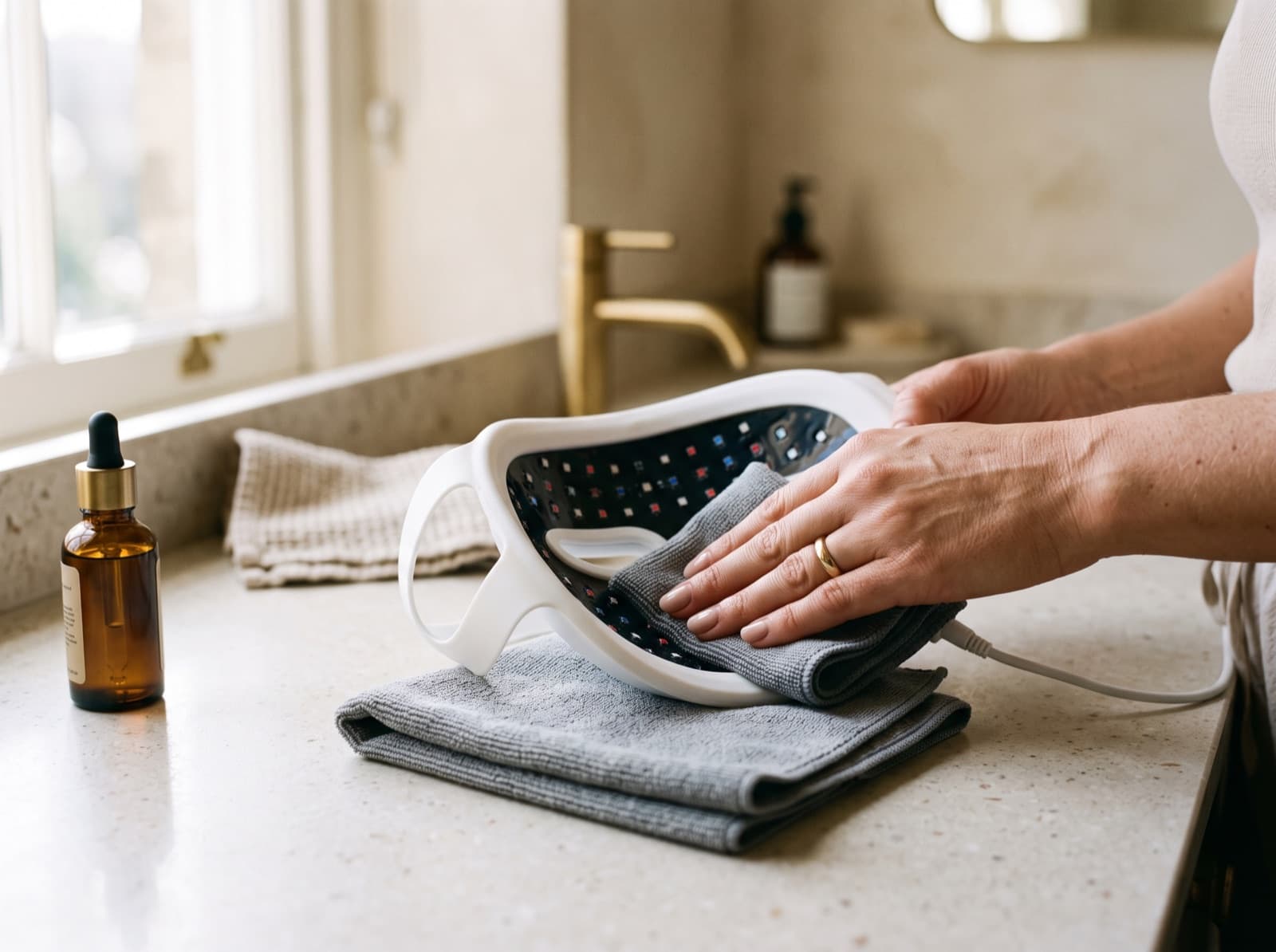
After each use, wipe the LED surface gently with a lint-free, slightly damp cloth. This removes serums, oils, and dead skin cells from the diodes. Avoid harsh chemicals or abrasive scrubbing; light pressure is enough.
Once a month, do a deeper clean with a soft microfibre cloth dampened with water and a drop of mild soap. Wipe the LED panel and frame, and avoid getting moisture near buttons or charging ports.
Keep your mask in a cool, dry place away from direct sunlight. Do not store it in a hot car or steamy bathroom; temperature extremes can damage the LEDs and battery. Use the storage pouch or case that came with it.
Charge the mask fully before first use, then recharge when the battery indicator drops. For cordless models, unplug once fully charged and do not leave them charging continuously for days, which can degrade the battery.
Avoid dropping the mask or pressing on the LED surface. Do not use household cleaners, alcohol, or abrasive materials on the LEDs. Keep it away from water and extreme heat. If water gets inside, let it dry completely in a warm room before using again.
Methodology and sources
This article was researched using peer-reviewed literature, dermatology expert guidance, and verified medical sources including Healthline, Medical News Today, and the American Academy of Dermatology. All efficacy claims are based on published evidence and presented with realistic effect sizes and timelines. The Advertising Standards Authority ruling on exaggerated LED mask claims was also referenced to provide context on which marketing claims are reliable.
Explore our full LED therapy range to find a mask that suits your skin concerns and budget.
Frequently asked questions
- Does an LED face mask actually work?
- Yes, LED face masks do work for the skin concerns they are designed to address, but results are subtle and gradual. The evidence supports modest improvements in skin texture, brightness, and mild inflammation over 4 to 12 weeks of consistent use. However, results are temporary without ongoing use, and dramatic transformations should not be expected.
- What are the disadvantages of LED face masks?
- The main disadvantages are time commitment (3-5 sessions per week), slow results (4-12 weeks), and temporary effects without ongoing use. Some users experience mild irritation or discomfort if they are photosensitive. Results also vary greatly by individual, so what works for one person may be less effective for another.
- Do LED face masks work for wrinkles?
- LED masks can soften the appearance of fine lines and improve skin texture over 8 to 12 weeks, particularly when using red and near-infrared light. However, they will not eliminate deep wrinkles or replace professional treatments like injectables or lasers. Think of LED therapy as a supportive treatment, not a wrinkle cure.
- Can I use an LED face mask every day?
- Most dermatologists recommend 3 to 5 times per week rather than daily use. Your skin needs recovery time between sessions to synthesise collagen and repair tissue. Daily use may trigger irritation or diminishing returns. If you want to use the mask more than 5 times per week, consult a dermatologist first.
- Do LED masks work without serums?
- Yes, LED masks work on bare skin. Serums and moisturisers are optional. However, light wavelengths penetrate more easily through clear skin, so apply your LED mask before serums and treatments. You can apply hydrating serums or other skincare after your session to lock in benefits.
- Are LED masks safe for eyes?
- Most LED masks include eye protection (a visor or shield). However, do not stare directly at the light source, and remove contact lenses before use. If you have glaucoma or other eye conditions, ask your GP before starting LED therapy. Temporary visual spots or mild discomfort can occur if you accidentally view the light directly.
Our best-value pick
The Lumavir 7 colour LED face mask is £37.99 with free UK shipping and a 14-day money-back guarantee, so there is time to settle into a routine before you commit.